Guide Classification
Classification explained - and why it’s included.
What the classification of your driving license classes is, why the German authority demands it according to FeV Anlage 11 - and why most offices want to see it together with the sworn translation. At Almantix, you get both for a 49 € fixed price.
Regulated in FeV Anlage 11No hidden feesBy sworn translator
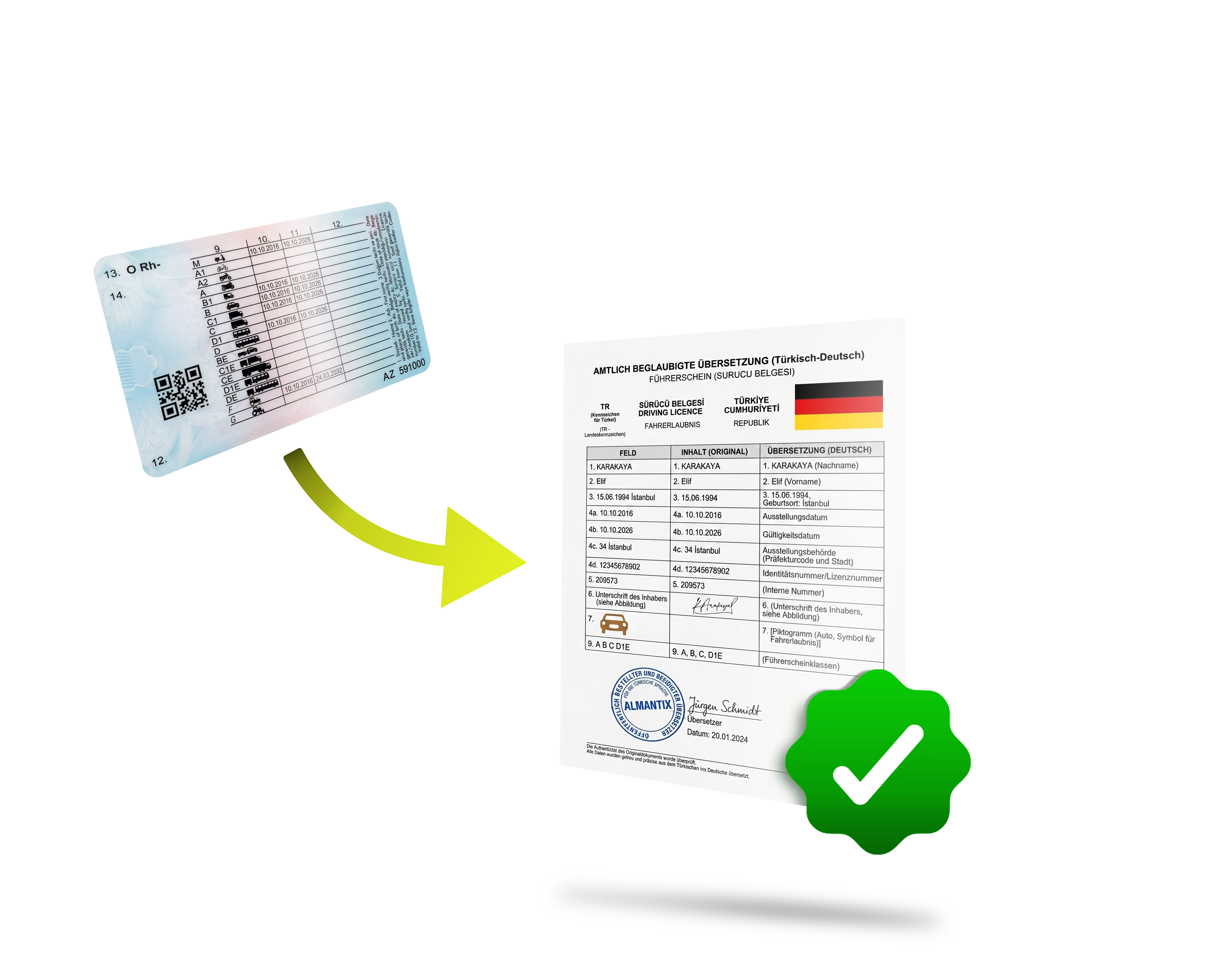
You ordered a translation. Now the office says you need more.
It’s not a trick and not a scam. Most German driving license authorities require two documents: a sworn translation of your foreign license AND a separate classification of your driving license classes. This is regulated by law - not an invention of the clerk.
What most providers won’t tell you: They know this too. They just charge you for the classification as a separate add-on at checkout because it allows for margin-structure tricks.
Classification in one sentence.
Classification is the formal assignment of your foreign driving license classes to the German EU categories - meaning which of your foreign classes corresponds to which German class.
🇹🇷 TR Sınıf B🇪🇺 DE Klasse B
🇹🇷 TR Sınıf C🇪🇺 DE Klasse C / C1
🇹🇷 TR Sınıf A🇪🇺 DE Klasse A / A2
Example: Your foreign class B becomes class B under German law. Your foreign class C becomes class C or C1, depending on the issue date and subcategory. Your foreign class A becomes A, A1, or A2 depending on engine capacity.
This assignment is not obvious to every clerk - nor is it readable on the original license. Therefore, a sworn translator must formally confirm it in a separate document that the authority adds to your file.
Classification + Translation.
Both for 49 €.
Why the authority doesn’t just do it themselves.
The legal basis is FeV Anlage 11. It dictates that foreign license classes are formally transcribed into German classes - and that this assignment is documented by a publicly sworn translator in Germany, NOT by the clerk themselves.
This has two reasons. First: legal clarity. If a sworn translator confirms the classification in writing, it is legally binding - in case of disputes, there is a document the authority didn’t just invent. Second: specialized knowledge. Foreign driving license classes have undergone multiple reforms. Which subcategory from 1998 corresponds to which EU category today is detailed knowledge that a clerk cannot process in 5 minutes at the desk.
Legal Clarity
Specialized Knowledge
Sworn Translator
A concrete example: a letter from the district of Dithmarschen explicitly requests both documents - sworn translation AND separate classification. The wording isn’t identical everywhere, but the pattern is the same across Germany.
Almantix delivers both for 49 €.Start translation